Coolest places from Vienna by train in June
By train from Vienna in June, the coolest well-known place is Zakopane, Poland, 4.8 °C cooler than Vienna and 11.1 h sun a day, about 6h 12m each way by train, for 8.5 kg CO₂e return. Flying, the coolest within 15 hours is Reykjavik, Iceland, 11.1 °C cooler than Vienna, about 7h 18m each way by air, for about 85× the carbon (726 kg).
The 6 coolest places by train from Vienna
Ranked on relief from the heat in June alone, among well-known places (a Wikivoyage travel guide and at least 40,000 Wikipedia readers a year) the train reaches within 15 hours of Vienna, one per area. The carbon is shown, not used to choose.
 Zakopane, Poland4.8 °C cooler · 11.1 h sun a day · 4.6 mm rain a dayrail ≈ 6h 12m · 8.5 kg CO₂e return
- La Chaux-de-Fonds, Switzerland4.2 °C cooler · 11.6 h sun a day · 4.9 mm rain a dayrail ≈ 11h 54m · 21.4 kg CO₂e return
- Flensburg, Germany4.2 °C cooler · 13.0 h sun a day · 2.2 mm rain a dayrail ≈ 14h 42m · 25.8 kg CO₂e return
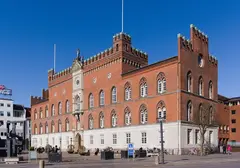 Odense, Denmark4.0 °C cooler · 13.5 h sun a day · 2.0 mm rain a dayrail ≈ 15h · 26.5 kg CO₂e return
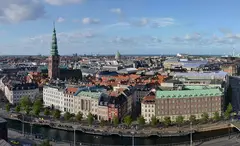 Copenhagen, Denmark3.8 °C cooler · 13.6 h sun a day · 1.4 mm rain a day · sea 15.4 °Crail ≈ 14h 36m · 25.7 kg CO₂e return
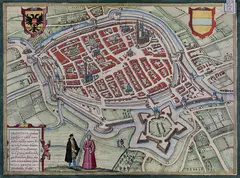 Groningen, The Netherlands3.8 °C cooler · 12.4 h sun a day · 2.3 mm rain a dayrail ≈ 14h 48m · 26.1 kg CO₂e return
If you fly: the coolest within 15 hours
Flying, most cities in northern Europe reach the same places, so the top 5 are shown; Reykjavik costs about 85× the carbon of Zakopane by train.
 Reykjavik, Iceland11.1 °C cooler · 7.9 h sun a day · 4.4 mm rain a day · sea 9.1 °Cair ≈ 7h 18m · 726 kg CO₂e return
 Tromsø, Norway7.7 °C cooler · 11.8 h sun a day · 3.0 mm rain a dayair ≈ 6h 42m · 601 kg CO₂e return
 Bodø, Norway7.4 °C cooler · 11.1 h sun a day · 4.8 mm rain a day · sea 10.2 °Cair ≈ 6h 18m · 534 kg CO₂e return
 Buxton, United Kingdom7.1 °C cooler · 11.6 h sun a day · 2.2 mm rain a dayair ≈ 5h 24m · 352 kg CO₂e return
 Aberdeen, United Kingdom6.9 °C cooler · 12.5 h sun a day · 2.2 mm rain a day · sea 11.3 °Cair ≈ 5h 36m · 399 kg CO₂e return
≈ is the model's estimate (air times include getting to and through the airport); ✓ is a rail journey checked against a real timetable, with the date it was checked. Temperatures are historical daily means for 2023–2024, averaged across day and night, so afternoons run warmer.
The low-carbon trade-off
The coolest place you can reach from Vienna in June within 15 hours is Reykjavik, 11.1 °C cooler, costing 726 kg CO₂e return. The lowest-carbon option is Zdar at 4.5 kg — 161× less carbon, for 7.7 degrees less relief from the heat.
Every destination here is on the efficiency frontier: nowhere else this site covers is both cooler in June and lower in carbon. Anything a better option beats outright has been left out.
By rail or ferry By air
What the 15-hour limit costs: at this budget Stavanger can only be reached by air — 348 kg CO₂e, in 5h 18m. Allow up to 24 hours and the train does the same journey for 40.8 kg in 22h — 9× less carbon for 16h 42m more travelling.
| Destination | How | CO₂e return | Temp | Sun/day | Rain/day | Journey |
|---|---|---|---|---|---|---|
| Zdar, Czechia | Rail | 4.5 kg | 16.6 °C | 12.5 h | 2.3 mm | 4h 18m |
| Zakopane, Poland | Rail | 8.5 kg | 15.2 °C | 11.1 h | 4.6 mm | 6h 12m |
| Stavanger, Norway | Air | 348 kg | 13.7 °C | 13.7 h | 4.1 mm | 5h 18m |
| Buxton, United Kingdom | Air | 352 kg | 12.9 °C | 11.6 h | 2.2 mm | 5h 24m |
| Harstad, Norway | Air | 576 kg | 11.6 °C | 11.9 h | 2.1 mm | 6h 36m |
| Reykjavik, Iceland | Air | 726 kg | 8.9 °C | 7.9 h | 4.4 mm | 7h 18m |
Warm is not the same as pleasant, which is why sunshine and rainfall are shown alongside temperature. All three are ERA5 monthly means for 2023–2024.
Where the curve breaks
The frontier is gentle until it isn't. Going from Zakopane (8.5 kg, 4.8 °C cooler) to Stavanger (348 kg, 6.3 °C cooler) buys 1.5 °C more relief from the heat for an extra 340 kg — 226 kg of CO₂e per degree. That single step is the most expensive relief from the heat on the whole curve.
The pick of them
 ZdarCzechia4.5 kg CO₂e returnwarm overallZakopanePoland8.5 kg CO₂e returnwarm but wetReykjavikIceland726 kg CO₂e returncold but bright
The same month, asked differently
June answers differently depending on what you are after, and the lists genuinely diverge: the brightest places are not the hottest, and in summer the useful question stops being where is warm at all.
Where to stay in Reykjavik
Places to stay in Reykjavik, Iceland, on a live map. Prices and availability come from Stay22 and its booking partners.
Search places to stay in Reykjavik →Opens the booking search in a new tab. Same partners as the map below.
The map is provided by Stay22 and uses cookies. Showing it loads Stay22 for this visit only.
Affiliate disclosure. A booking made through this map may earn 0xCarbon a commission, at no extra cost to you. It changes nothing above it: the emissions figures come from UK Government conversion factors and are computed before anyone is paid anything.See the method.
Other months from Vienna
June from elsewhere
- Amsterdam
- Barcelona
- Berlin
- Birmingham
- Bristol
- Brussels
- Cardiff
- Copenhagen
- Dublin
- Edinburgh
- Frankfurt
- Glasgow
- Leeds
- Lisbon
- Liverpool
- London
- Madrid
- Manchester
- Milan
- Munich
- Newcastle
- Nottingham
- Oslo
- Paris
- Prague
- Rome
- Sheffield
- Southampton
- Stockholm
- Vienna
- Warsaw
- Zurich
Photo credits
- Zdar: Herbert Frank from Wien (Vienna), AT, CC BY 2.0, via Wikimedia Commons
- Zakopane: Maksym Kozlenko, CC BY-SA 4.0, via Wikimedia Commons
- Reykjavik: Hedwig Storch, CC BY-SA 3.0, via Wikimedia Commons
- Tromsø: Diego Delso, CC BY-SA 4.0, via Wikimedia Commons
- Bodø: Røed 20:41, 24 July 2006 (UTC), CC BY-SA 2.5, via Wikimedia Commons
- Buxton: Andrew Hill, CC BY-SA 2.0, via Wikimedia Commons
- Aberdeen: Ragazzi00, CC BY-SA 3.0, via Wikimedia Commons
- Dundee: File:442 dundee header.png (Tay Bridge and RSS Discovery images):- Original: PlutosAcademy File:V&A Dundee Near Completi, CC BY-SA 4.0, via Wikimedia Commons
- Bergen: W. Bulach, CC BY-SA 4.0, via Wikimedia Commons
- Östersund: Lars Falkdalen Lindahl (User:Njaelkies Lea), CC BY-SA 3.0, via Wikimedia Commons
- Douglas: Jim Linwood, CC BY 2.0, via Wikimedia Commons
- Sligo: Gerd Eichmann, CC BY-SA 4.0, via Wikimedia Commons
- Odense: Emelie Graven, CC BY-SA 4.0, via Wikimedia Commons
- Copenhagen: Pudelek, CC BY-SA 4.0, via Wikimedia Commons
- Groningen: Braun & Hogenberg, Public domain, via Wikimedia Commons


Questions
Can I get somewhere cool from Vienna in June without flying?
Yes. Zakopane reaches 4.8 °C cooler and is reachable by rail or ferry in 6h 12m (modelled), emitting 8.5 kg CO₂e return — though Reykjavik is cooler still, if you fly.
Where is the coolest place to go from Vienna in June?
Reykjavik, Iceland, at 11.1 °C cooler. Reaching it emits 726 kg CO₂e return, travelling 7h 18m each way by air (modelled).
How much carbon does a return trip from Vienna to Reykjavik produce?
726 kg CO₂e for one person, return, by air. That uses the UK Government's 2026 conversion factors, including radiative forcing for flights.
Carbon uses UK Government (DESNZ/DEFRA) 2026 conversion factors applied to great-circle distance, with radiative forcing included for flights. Rail journey times are modelled estimates, not timetabled services. Full method · download the data.