Three to five nights from London without flying or hiring a car
This collection is for travellers who want a short European break using trains and urban public transport. "Car-free" means the principal journey, arrival transfer, accommodation area and suggested activities can be handled on foot, by train, métro, tram, bus or funicular. The six published journeys were checked against Eurostar and connecting-operator timetables on 14 and 15 September 2026. Scheduled rail time is not a promise of punctual running. The site's carbon calculations use UK Government greenhouse-gas conversion factors.
All six candidates were screened for rail journeys from London with no more than one principal intercity change, in both directions, on dated timetables. All six passed: Lille, Bruges, Lyon and Avignon on 14 September 2026, Montpellier and Bordeaux on 15 September.
The 6 verified breaks from London, by door-to-door time. Carbon is one person, return, by rail.
London St Pancras → Paris Gare du Nord (Eurostar), Métro 4 to Montparnasse, TGV to Bordeaux Saint-Jean; one change of train plus the cross-Paris transfer, about 6 h
Out: Eurostar to Lille Europe, TGV to Montpellier Sud de France; back: TGV from Montpellier Saint-Roch to Lille Europe, Eurostar to London. One change each way, about 8 h
3h 24m ✓ door to door · 7.2 kg CO₂e return by rail against 61.0 kg by air · arrive Lille Europe
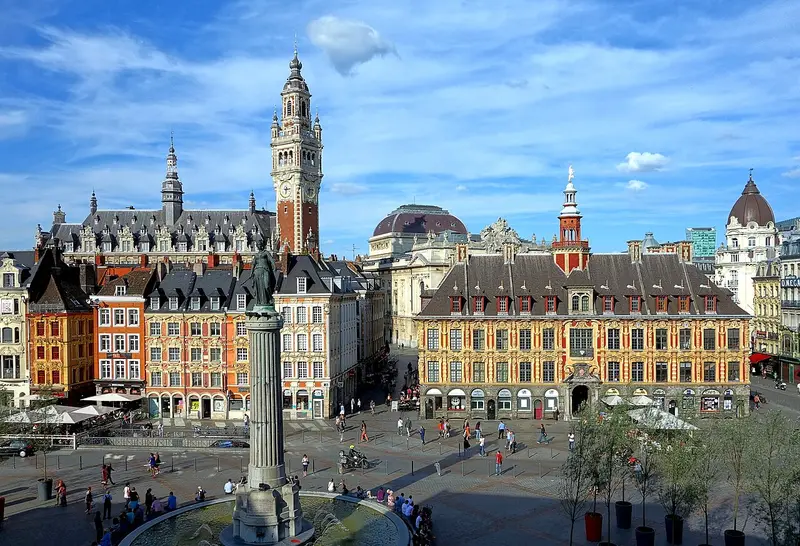
Direct Eurostar to Lille-Europe. It suits a compact art, food and architecture break, with Vieux-Lille the most convenient first-time base. The Palais des Beaux-Arts, Wazemmes and central streets work without a car. The main caveat is scale: five nights may require excursions, including La Piscine in Roubaix.
Who it suits. Lille suits travellers wanting a compact break centred on art, architecture, markets and food, with most central sights walkable. Three nights is ample for the city; five nights makes more sense with excursions. It does not suit someone seeking countryside or a large programme of outdoor activities.
The catch. The compact central sightseeing area may not fill five nights without excursions.
Where to stay.Vieux-Lille — The old town: the historic sights, restaurants and the compact centre in one walkable area, per the city tourism office.
The full Lille page — verified legs, 7-night stay carbon (46.9 kg for one room), and the map of places to stay.
5h 36m ✓ door to door · 7.0 kg CO₂e return by rail against 59.1 kg by air · arrive Brugge
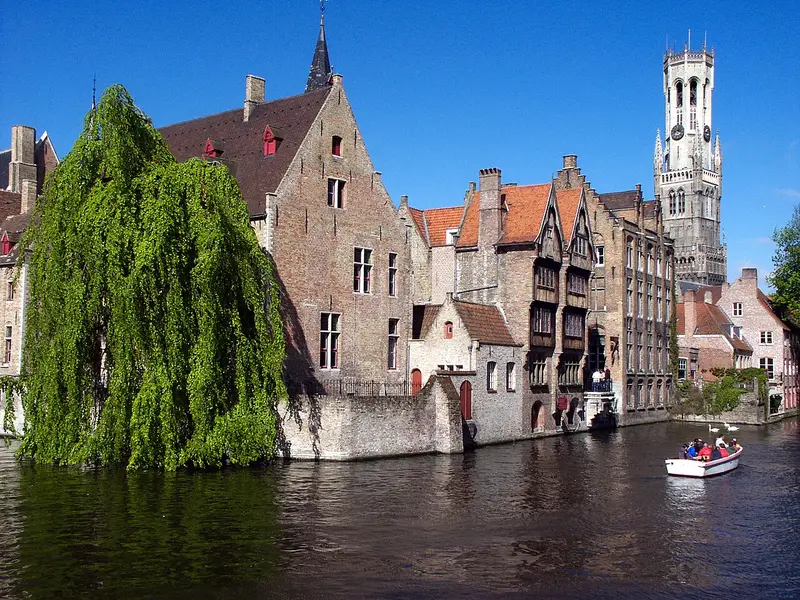
Eurostar to Brussels-Midi, then Belgian domestic train to Brugge. It suits walking, medieval architecture and museums, with the historic centre the practical stay area. The station is about a 20-minute walk away. The biggest caveat is heavy day-visitor traffic around Markt and the principal central streets.
Who it suits. Bruges suits first-time visitors interested in medieval streets, museums, churches and walking, without needing a car. Three nights allows a slower visit after day-trippers leave. It is less suitable for travellers wanting nightlife, varied modern districts or five full days of urban sightseeing.
The catch. The central streets receive heavy day-visitor traffic.
Where to stay.Historic centre (within the ring canal) — Everything a first visit is for is inside the ring and reached on foot, per Visit Bruges.
The full Bruges page — verified legs, 7-night stay carbon (85.4 kg for one room), and the map of places to stay.
7h 54m ✓ door to door · 21.8 kg CO₂e return by rail against 185 kg by air · arrive Lyon Part-Dieu
Eurostar to Lille-Europe, then TGV to Lyon Part-Dieu. It suits food, museums, Roman history and contrasting neighbourhoods. Presqu'île works well for first visitors, with Vieux Lyon reached by Métro D. The biggest caveat is journey length; hills and cobbles also complicate Vieux Lyon and Fourvière for some visitors.
Who it suits. Lyon suits travellers interested in food, Roman remains, museums and several contrasting neighbourhoods connected by métro, tram and funicular. It can fill five nights more readily than Lille or Bruges. Vieux Lyon and Fourvière are less suitable for visitors who find steep streets or cobbles difficult.
The catch. The verified rail journey is considerably longer than Lille or Bruges.
Where to stay.Presqu'île — The most central base: Bellecour, the shops, restaurants and the principal city-centre sights, per the Lyon tourism office. Suits a first visit. Vieux Lyon — The Renaissance old town: traboules, the cathedral quarter and the funicular up to Fourvière. Suits a visitor who wants the historic district over the shopping centre. Part-Dieu — The district around the arrival station: convenient for the train, shopping and onward transport, not the historic centre.
The full Lyon page — verified legs, 7-night stay carbon (46.9 kg for one room), and the map of places to stay.
8h 12m ✓ door to door · 21.9 kg CO₂e return by rail against 187 kg by air · arrive Bordeaux Saint-Jean
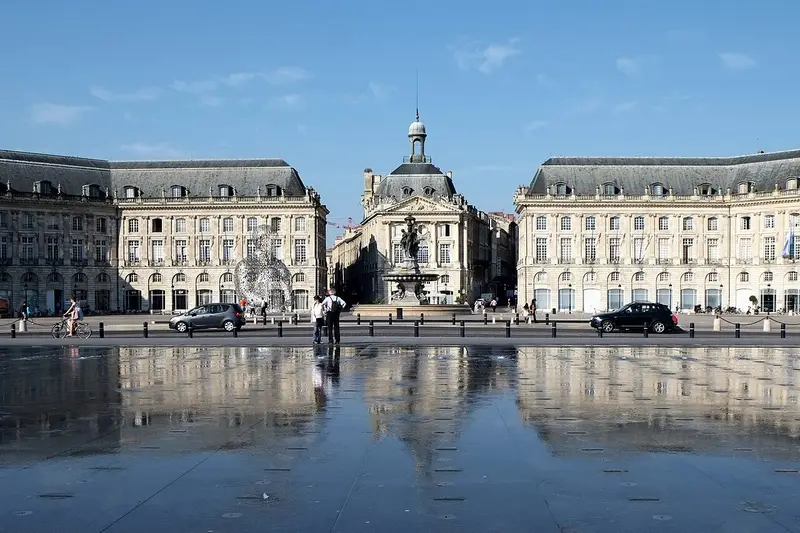
Eurostar to Paris and TGV from Montparnasse to Bordeaux Saint-Jean, crossing Paris by Métro line 4 each way. It suits the historic centre - Saint-Pierre and Vieux Bordeaux - a tram ride from the station. The principal caveat is the cross-Paris transfer with luggage, and the return connection that only some trains leave enough time for.
Who it suits. A car-free break suits visitors interested in architecture, museums, food, wine culture and walking through a compact historic centre. It is less suitable for travellers whose priority is independently visiting scattered vineyards without pre-planned trains, buses or excursions.
The catch. The rail journey requires a cross-Paris transfer between Gare du Nord and Montparnasse.
Where to stay.Saint-Pierre / Vieux Bordeaux — The historic, central and lively part of the city; the first-visit base, per the tourism office. Saint-Michel / Sainte-Croix — Closer to Saint-Jean while still inside the historic inner city; convenient for a car-free arrival.
The full Bordeaux page — verified legs, 7-night stay carbon (46.9 kg for one room), and the map of places to stay.
8h 42m ✓ door to door · 27.1 kg CO₂e return by rail against 231 kg by air · arrive Avignon TGV
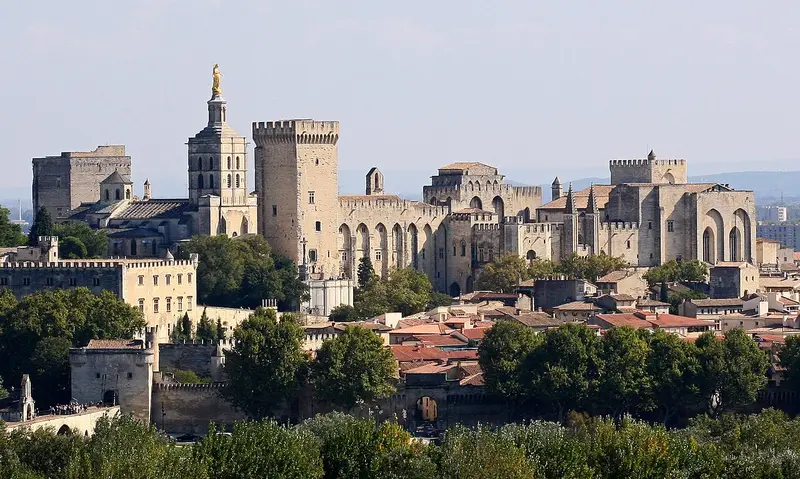
Eurostar and TGV, outward via Paris and return via Lille. It suits medieval monuments, art and a compact walking itinerary, with the walled centre the practical base. The principal caveat is that Avignon TGV lies outside the centre and needs a local train or road transfer.
Who it suits. Avignon suits travellers wanting a compact walled centre, major medieval monuments and art collections, with most sightseeing possible on foot. Three nights is sufficient for the city itself. It is less suitable for visitors expecting the July festival outside its season or easy late-evening access from the TGV station.
The catch. Avignon TGV is outside the historic centre and requires an onward connection.
Where to stay.Intra-muros (inside the walls) — The historic centre: the Palais des Papes, the bridge and the old streets are all inside the walls and reached on foot, per the tourism office.
The full Avignon page — verified legs, 7-night stay carbon (46.9 kg for one room), and the map of places to stay.
9h 54m ✓ door to door · 27.4 kg CO₂e return by rail against 233 kg by air · arrive Montpellier Sud de France (outward); the return leaves from Montpellier Saint-Roch, the central station
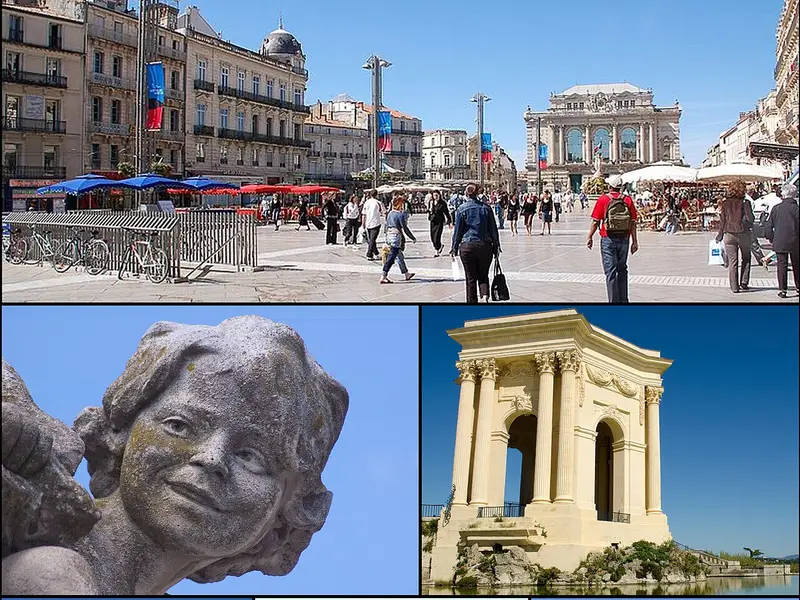
Eurostar to Lille-Europe and TGV to Montpellier, with the return leaving from the central Saint-Roch station. It suits a compact walled old town, the Écusson, reached on foot from Saint-Roch. The principal caveat is that the outward TGV arrives at Sud de France, out of town on the bypass line, and needs tram line 1 into the centre.
Who it suits. A car-free break suits visitors interested in a walkable historic centre, art, markets and occasional coastal trips by public transport. It is less suitable for travellers wanting a beach-resort stay or a simple same-station rail arrival and departure.
The catch. The outward train arrives at peripheral Sud de France, while the return leaves from Saint-Roch.
Where to stay.Écusson (historic centre) — The principal historic sights, restaurants and pedestrian streets; the obvious base for a first, car-free visit, per the tourism office. Gare Saint-Roch / Comédie — Beside the central station and the Place de la Comédie; tram connections and walking access to the Écusson.
The full Montpellier page — verified legs, 7-night stay carbon (46.9 kg for one room), and the map of places to stay.
What this page does not do
It does not quote undated fares, recommend particular hotels or claim that rail will suit every traveller. Any fare shown elsewhere must state its search date and ticket conditions. Accessibility, disruption, engineering work and minimum connection preferences still require individual checking.
Journey times marked ✓ were checked against the operators' timetables on 2026-09-15 for the travel dates recorded on each destination page. "Model said" is the site's distance-based estimate, shown so the difference is visible. Carbon uses UK Government 2026 conversion factors; see the methodology. Other departure cities: Amsterdam, Barcelona, Berlin, Birmingham, Bristol, Brussels and the rest.